What Is Mediterranean Gothic? Notes Toward a Definition
by Ausiàs Tsel
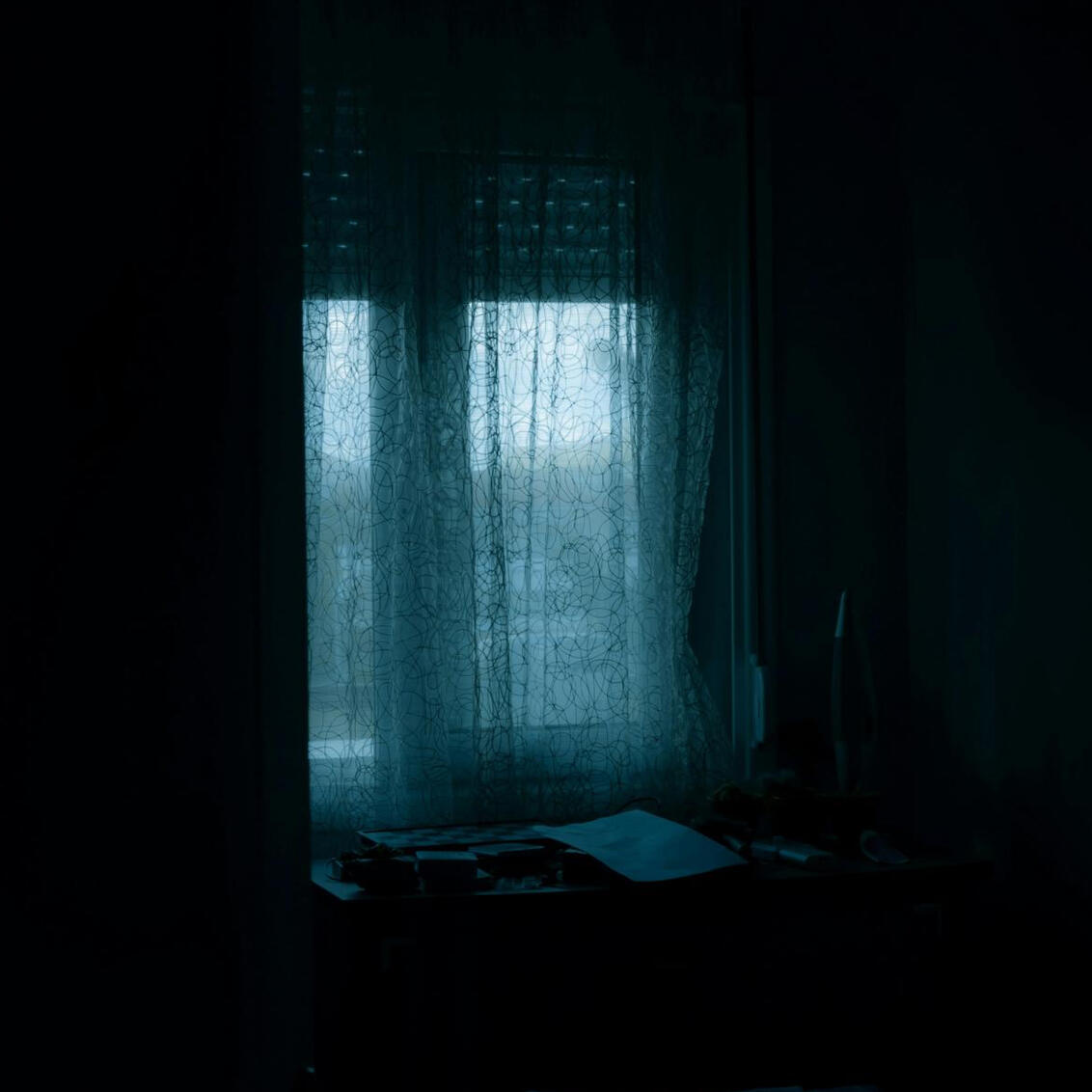
I grew up in a house where the shutters were always closed.Not because of the cold. There was no cold. This is the Valencian Country — eastern coast of the Iberian Peninsula, the kind of place where August hits forty degrees and the walls hold heat like kilns. The shutters were closed because of the neighbors. Because of what they might see. Because in a Mediterranean town, every window is a mouth, and every mouth reports.The horror I know has never had fog in it. It doesn’t smell of petrichor or orange blossom. It smells of diesel, of chemical plant, of the synthetic countertop surfaces that replaced the stone. The Mediterranean they sell you in postcards has an orchard scent. The one I grew up in smells of industry laid over agriculture the way concrete is laid over earth: to make it productive, to make it forget what it was.
When I started writing fiction that frightened me, I reached for the models I’d been given. Shirley Jackson’s houses that think. Poe’s crypts and their damp breath. The moors, the rain, the creaking manors of English Gothic. Later, Ligotti’s puppet-string cosmos, the New England cold of Lovecraft, the dread that seeps through cracks in a world that is structurally wrong.None of it was mine.I don’t mean I didn’t admire it. I did. I still do. But when I sat down to write about the things that had actually scared me — the real ones, the ones that lived in my body — there was no fog. No castle. No autumn. There was a church in May with the doors open and the heat pouring in. There was a communion dress stained with something that might have been wine or might have been blood. There was my grandmother’s house, where every surface was clean and no one ever talked about why.The Gothic tradition of northern Europe and New England runs on concealment through darkness: what lurks in shadow, what the fog hides. But where I come from, concealment happens in full light. The horror is not that you can’t see. The horror is that everyone can see and no one speaks.That’s the first principle. Light does not reveal. Light is the instrument of silence.
Take the houses.In the English Gothic, the house is a character. It breathes, it watches, it has memory. Hill House, Manderley, Thornfield Hall — they trap their inhabitants in architecture that mirrors psychological damage.The Mediterranean house does something worse. It performs normalcy.There are two versions. The first is the one you might picture: the old town, the whitewashed walls, the swept tile, the geraniums on the balcony. From outside: impeccable. Inside, the shutters are drawn. What happens behind them is governed by a single rule — no ho expliques — don’t tell. Don’t tell the neighbors. Don’t tell the priest. Don’t tell the children, who already know.But that’s the pastoral version, and the pastoral is already half a lie. The second version is the one most of us actually live in: the apartment block. Concrete, not limestone. A lift that smells of bleach and cooking oil. Walls thin enough to hear your neighbor’s television, his coughing, his arguments at two in the morning. The shutters here are roller blinds, plastic, and they perform the same function. The geraniums are gone. The silence is the same.And underneath both — the village house and the apartment block — is what was built over. This is the part no Gothic tradition I know accounts for. The Mediterranean city is modern the way a fresh coat of paint is modern: it covers what’s underneath without removing it. In the País Valencià, the twentieth century left mass graves that became parking lots, prisons that became apartment buildings, Civil War trenches that became industrial estates. No excavation. No memorial. Just concrete poured over bone, and the faint institutional smell of disinfectant — the chemical that doesn’t clean so much as it commands you to stop smelling what’s underneath. The democracy arrived and built its shopping centers on top of the dictatorship’s foundations, and everyone agreed not to dig.You see the same machinery across the Mediterranean basin. Southern Italy, the Maghreb, Greece, Turkey — everywhere the ancient and the brutal sit directly beneath the ordinary, separated by a few meters of fill and a collective decision to look forward. Western civilization, that old phrase, rests on this talent for building over.I wrote a story called “Diumenge de maig” —May Sunday— about fifty-three children lined up in a Valencian church for their First Communion. White dresses, white shirts, white shoes that hurt. Above the altar, a painted Christ with a wound the color of rust. When the wound begins to drip onto an eight-year-old girl, she cannot move. Not because she’s paralyzed. Because she has been taught that you do not interrupt the priest. You do not make noise. You do not move until you are spoken to.The old woman in the front pew sees the blood and weeps with joy. Miracle, she whispers.The girl weeps with terror.Same blood. Same church. Same light fracturing through stained glass. Two entirely different horrors, and neither involves a ghost.That’s the second principle. The institution is the haunting. The family, the Church, the town — these are not backdrops. They are the mechanism.
I should be honest about the theology.I was raised Catholic. Not reluctantly — I believed. The way children believe: completely, without irony, because it was the structure of the world. Mass on Sundays. Communion. Confession. The architecture of guilt that Catholicism builds inside you before you’re old enough to notice the scaffolding.I lost it. Not in a single dramatic rupture. There was no crisis of faith, no dark night of the soul in the grand tradition. It eroded. Slowly, the way limestone erodes under dripping water, leaving a cavity that holds the shape of what used to be there.What I did not lose was the reverence for the machinery. Years ago, I walked into a Mass at the Basilica di Santa Croce in Florence. A tourist among tourists. The incense hit me first —that sweet, acrid, ancient smell that Catholicism owns completely— and then the chanting, and then the light through stone, and I stood there and felt something I can only describe as awe without belief. The full weight of the ritual pressing down on a place where faith used to be.I did not take communion. Out of respect for a thing I no longer share but refuse to mock.That tension —the empty socket where faith was, still shaped exactly like faith— is the engine of everything I write. The inability to return to something you know was built to hurt you but which you cannot stop recognizing as beautiful.That’s the third principle. The theology is corroded, not absent. God is not dead in Mediterranean Gothic. God is silent. And silence from someone who is supposed to answer is worse than absence.
The violence question.Every Gothic tradition has a relationship with violence, and most of them get it wrong for my purposes. The English Gothic tends toward restraint — violence implied, suggested, lingering in the unsaid. American Gothic, particularly the Southern strain, leans into the grotesque — Flannery O’Connor’s peacocks and burning barns, Cormac McCarthy’s scalps. The Italian giallo made violence operatic, erotic, aestheticized — gorgeous and empty. Splatter as choreography.None of this.The violence I know is domestic, procedural, and quiet. It happens in kitchens. It happens between people who will sit at the same table for dinner afterward. It is not dramatic. It does not announce itself. It is, above all, functional: it maintains a structure, enforces a silence, keeps the shutters closed.When I write violence, I follow a rule: if it doesn’t change a decision, a hierarchy, or impose a physical cost that the character must then manage —breathe around, sleep around, hide— it’s decoration. Decoration is a lie. I’m not interested in the spectacle of suffering. I’m interested in its logistics.In “Nail and Cut,” a woman kills a man during sex. The violence is precise: a single cut, timed to orgasm. But the horror isn’t the blade. It’s the apartment: clean as a surgery, a single devotional book on the shelf, a toiletry bag placed with the precision of a surgical instrument. The horror is that this is a system. She has done this before. She will do it again. And afterward, she hums a Lenten hymn on her way to the shower.That’s the fourth principle. Violence is infrastructure, not spectacle.
The southern gothic is the closest cousin, and the distinction matters.The American South and the Mediterranean share heat, religiosity, a culture of honor and shame that produces similar symptoms. But the southern gothic carries a specific engine —the legacy of slavery and the Civil War— that drives everything, even when submerged. And crucially, the American South displays its wounds. Confederate monuments, battlefield memorials, the ongoing public argument about what happened and who is responsible. The wound is contested but visible.The Mediterranean doesn’t argue. It plasters over. The dictatorships ended, the democracies arrived, and the bones stayed in the ground. No truth commissions. No public reckonings. Just new construction over old foundations, and a shared understanding that digging is in poor taste.The Mediterranean Gothic I write runs on this engine: the collision between Catholic institutional power and the domestic sphere —confession as surveillance, communion as obedience— laid over a deeper silence, the silence of societies that agreed to forget in exchange for normalcy. The priest who knows what happens behind the shutters and says nothing, because the shutters are the system and the system is his.
In October 2024, the floodwaters hit València.The DANA —a Mediterranean storm system— dropped more rain in eight hours than the region normally sees in a year. Entire towns buried in mud. Cars stacked like coffins in underground garages where people had drowned. And then the silence: days before institutional help arrived, government spokespeople choosing euphemisms while bodies were still being pulled from basements.I live in a part of the Valencian Country that wasn’t directly hit. I watched it on screens. But what struck me was not the destruction. It was how familiar the pattern was. Catastrophe in plain sight. Institutions looking away. Citizens left to dig themselves out, literally, with their hands.The DANA was not a metaphor. But it was proof. The mud inside the houses —not the clean mud of rain on soil but the black sludge of ruptured sewage and diesel and everything a city buries in its underground— rising into kitchens and bedrooms. The waterline on the walls. The same machinery I’d been writing about —the horror that happens under bright light while the authorities close the shutters— made visible, and for once, smellable, to everyone.
Let me attempt the definition.Mediterranean Gothic is horror under hard light. It is the terror of things that everyone knows but no one says. It operates through institutions —the Church, the family, the state— that function simultaneously as shelter and as cage. Its violence is domestic, procedural, and quiet. Its theology is corroded: God is not dead but silent, and the rituals built to reach Him have become instruments of control. Its landscapes are not dark forests or fog-shrouded moors but apartment blocks built over unmarked graves, churches where the sun pours through stained glass onto the faces of children who have been taught not to move, and cities that have perfected the art of building over what they refuse to excavate.It is not the Gothic of the north, which hides its horrors in darkness.It is not the southern gothic, which inherits its horrors from a specifically American wound.It is not the giallo, which aestheticizes its horrors into choreography.It is not the folk horror revival, which locates its horrors in pagan survivals.It is the Gothic of the apartment block built on top of what was never exhumed. The Gothic of the meal eaten in silence after the thing that cannot be named. The Gothic of the grandmother who prays the rosary until her knuckles go white, and the grandchild who watches and understands, too early, that the prayer is not reaching anyone.
I write in two languages —Catalan/Valencian and English— because the wound is bilingual. The silence I grew up in happened in Valencian. The literature that taught me to name it was mostly in English. Neither language owns the full story. The friction between them is part of the work.I write from the País Valencià, which is not Spain in the way that matters here —not the Spain of Almodóvar’s baroque excess or the Castilian centralism of the literary canon. It is a place with its own language, its own silence, its own way of closing doors.I write about communion wafers and nerve ablations and shuttered windows and the logistics of living with pain that has been sanctified by repetition. About what happens when the body becomes a manuscript the author has tired of revising. About children who notice too much and adults who have perfected the art of noticing nothing.I write Mediterranean Gothic because no other label fits. Because the horror I know happens at noon, in a clean apartment, with the blinds drawn and the building’s foundations resting on something no one agreed to remember. Because the scariest thing I’ve ever experienced is not a monster or a ghost or the dark.It’s the silence of a room full of people who all know exactly what happened and will never, under any circumstances, say it out loud.